What's the problem?
Flushing wipes and sanitary products
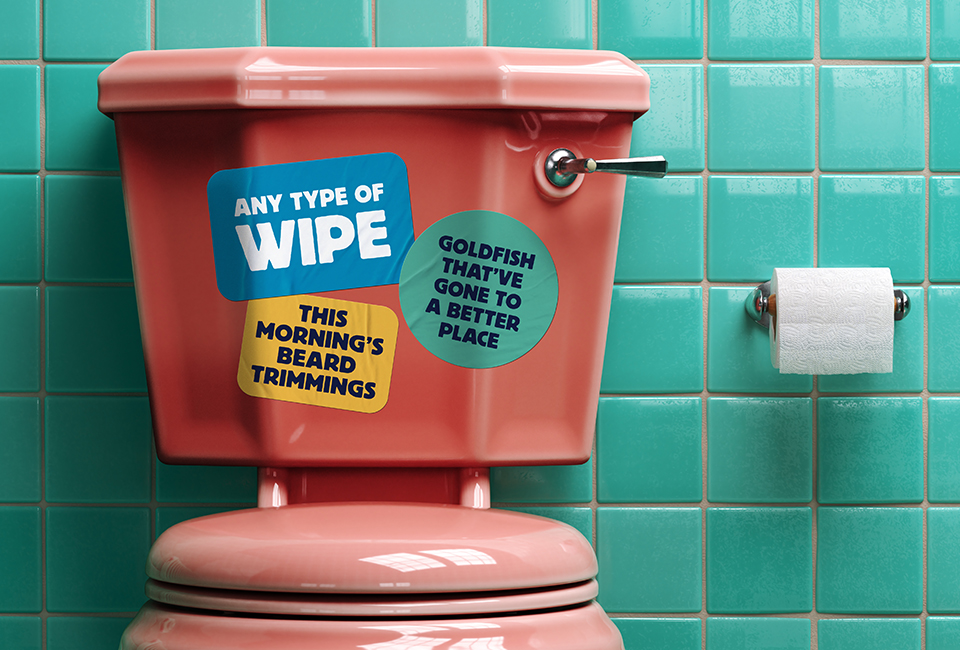
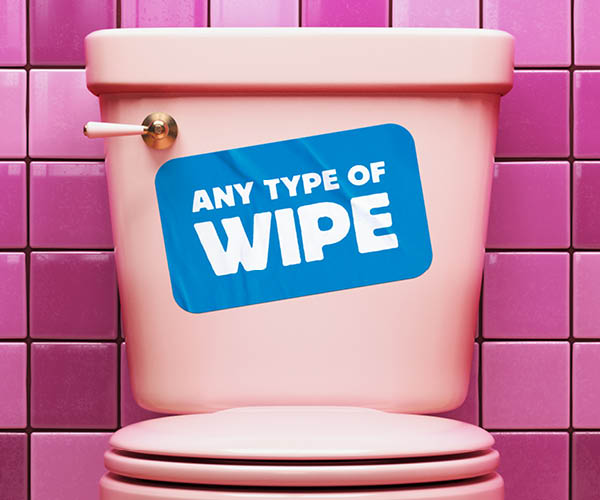
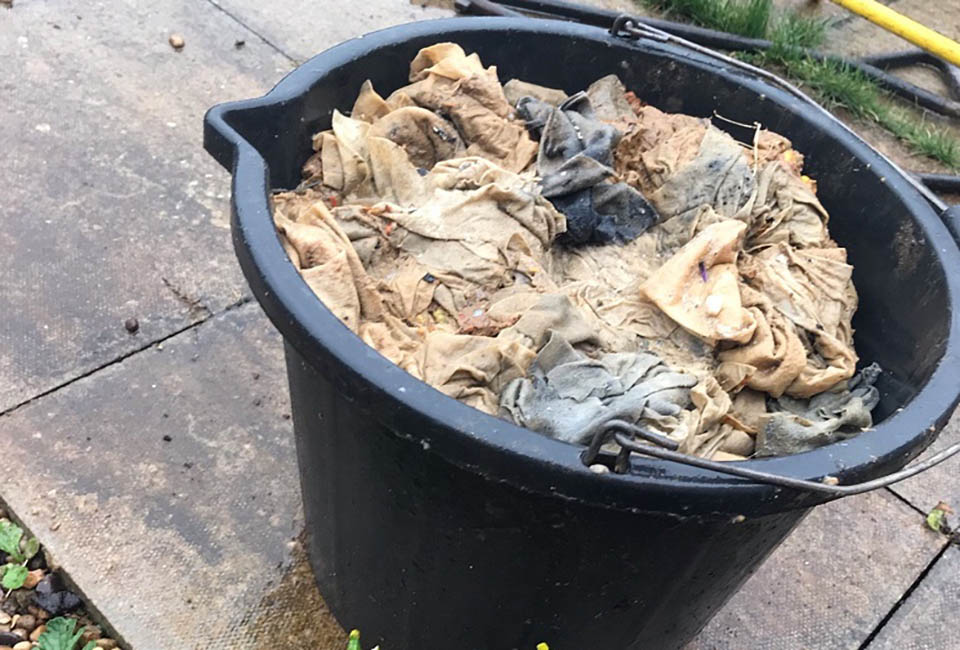
Wipes and sanitary products should never be flushed down the toilet, even the biodegradable ones. They contain plastic fibres that can build up in your pipes, eventually causing a nasty flood in your garden, or worse, your home. It also damages our environment too.
Nearly 50% of blockages in Yorkshire are caused by wipes.
Tipping fat, oil and grease down the sink
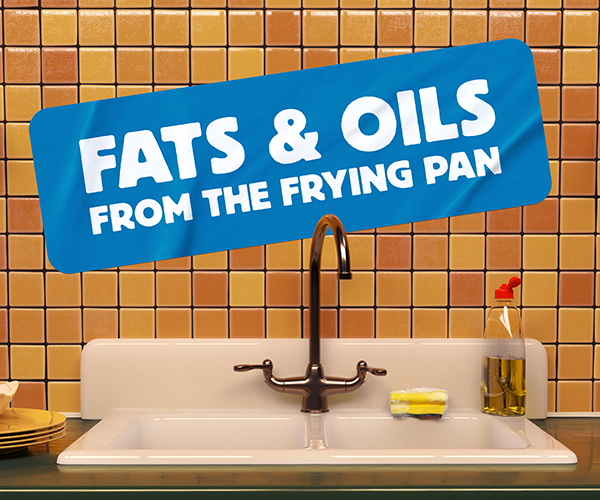
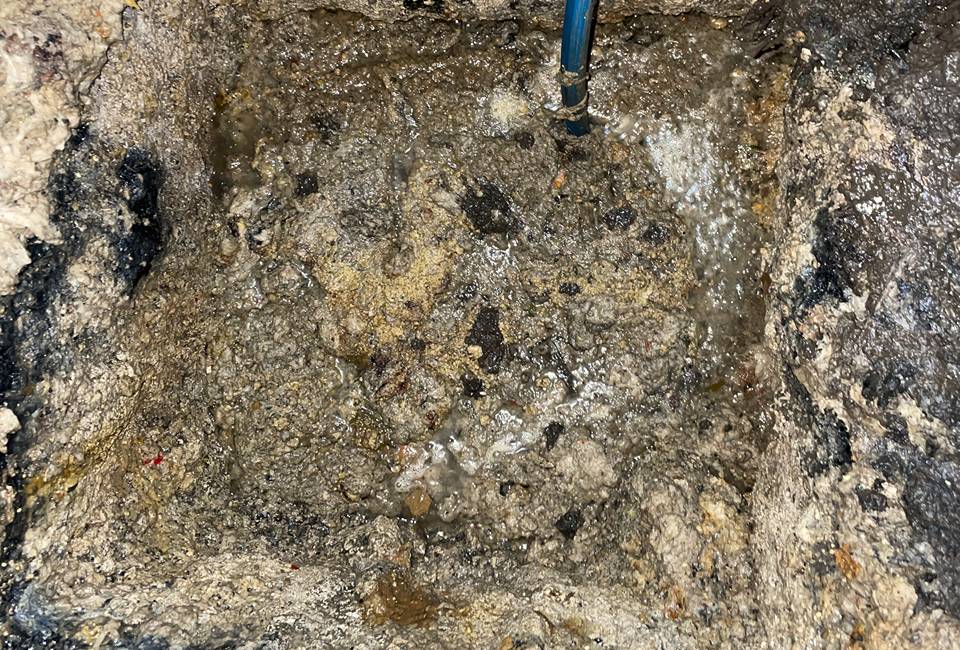
Liquid fats, oils and greases turn solid in your pipes, even if you wash them away with boiling water or washing up liquid. Once inside the pipes they build up and cause blockages that can stop your waste water moving away from your house.
This can cause enormous blockages of fat called fatbergs. The biggest one we've uncovered so far weighed 1.5 tonnes.
What should you do?
KITCHEN
TOP TIPS
TOP TIPS
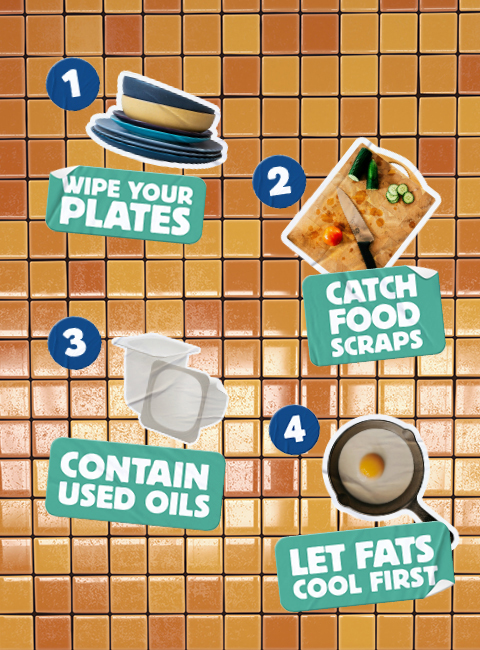
✔ Use kitchen roll to remove leftovers before washing up.
✔ Use a sink strainer to catch anything that falls into the sink.
✔ Let oils cool, pour them into a container and bin them.
✔ Let fats cool, once solid, scrap into the bin - never down the sink.
BATHROOM
TOP TIPS
TOP TIPS
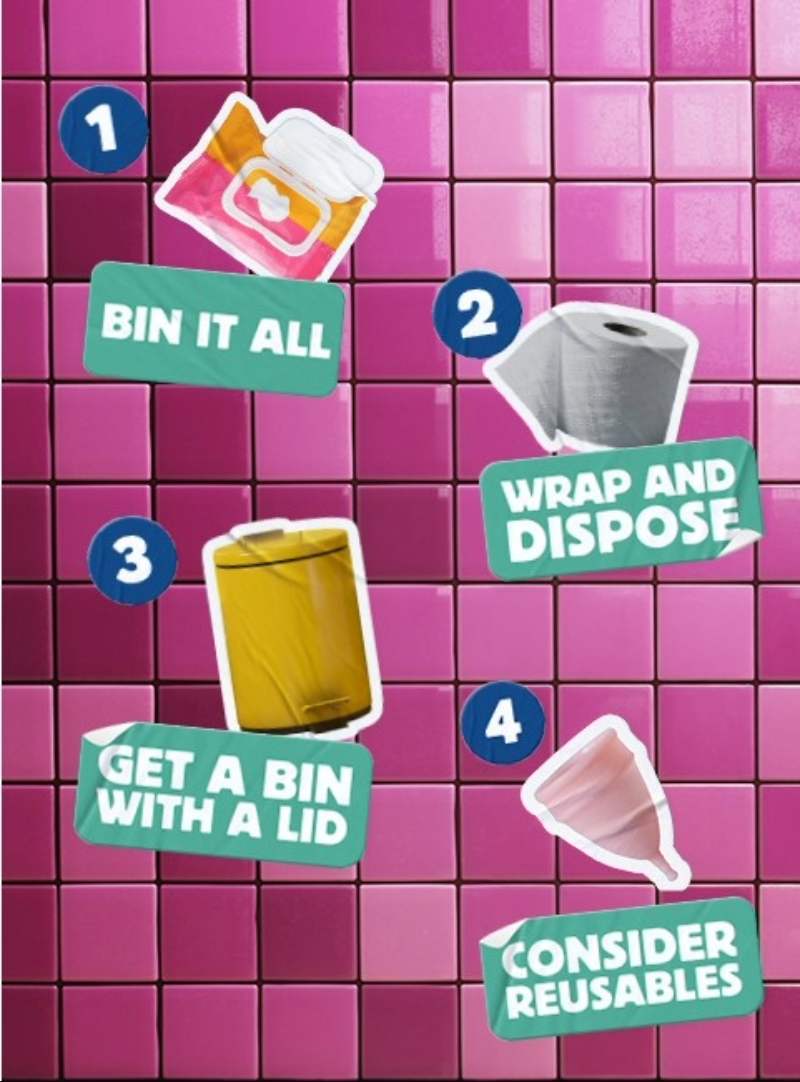
✔ Bin all wipes, tampons, pads, wrappers and applicators.
✔ Wrap sanitary products before disposing.
✔ Keeping a bin close by makes disposal quick and easy.
✔ Try reusables. They're better for the planet and your pipes.
Rather watch a video?
What are we doing?
No one wants to see that mucky old wet wipe again, especially when it’s spent some time down the sewers, but it can happen unless we all make a few simple changes and put a stop to blockages.
Wipes, pads and towels
We’ve partnered with Hey Girls to create an education programme around single use period products and provide sustainable alternatives.
Fat, oil and grease
Our Network Protection Team are out and about working with Food Service Establishments in hotspot areas to reduce blockages caused by fats, oils and greases.
Storm overflows
We’ve committed £1.5 billion to improving our storm overflows - that means there are more safe spaces for the water to run off to if there are blockages in the sewers, rather than dirty water backing up into people's homes.