
Yorkshire Water working in partnership to increase biodiversity on the region’s moors
6/2/2026
As it enters a new period of funding for moorland restoration, Yorkshire Water is financing a scientific study into the spread of one of moorland’s most dominant plant species.
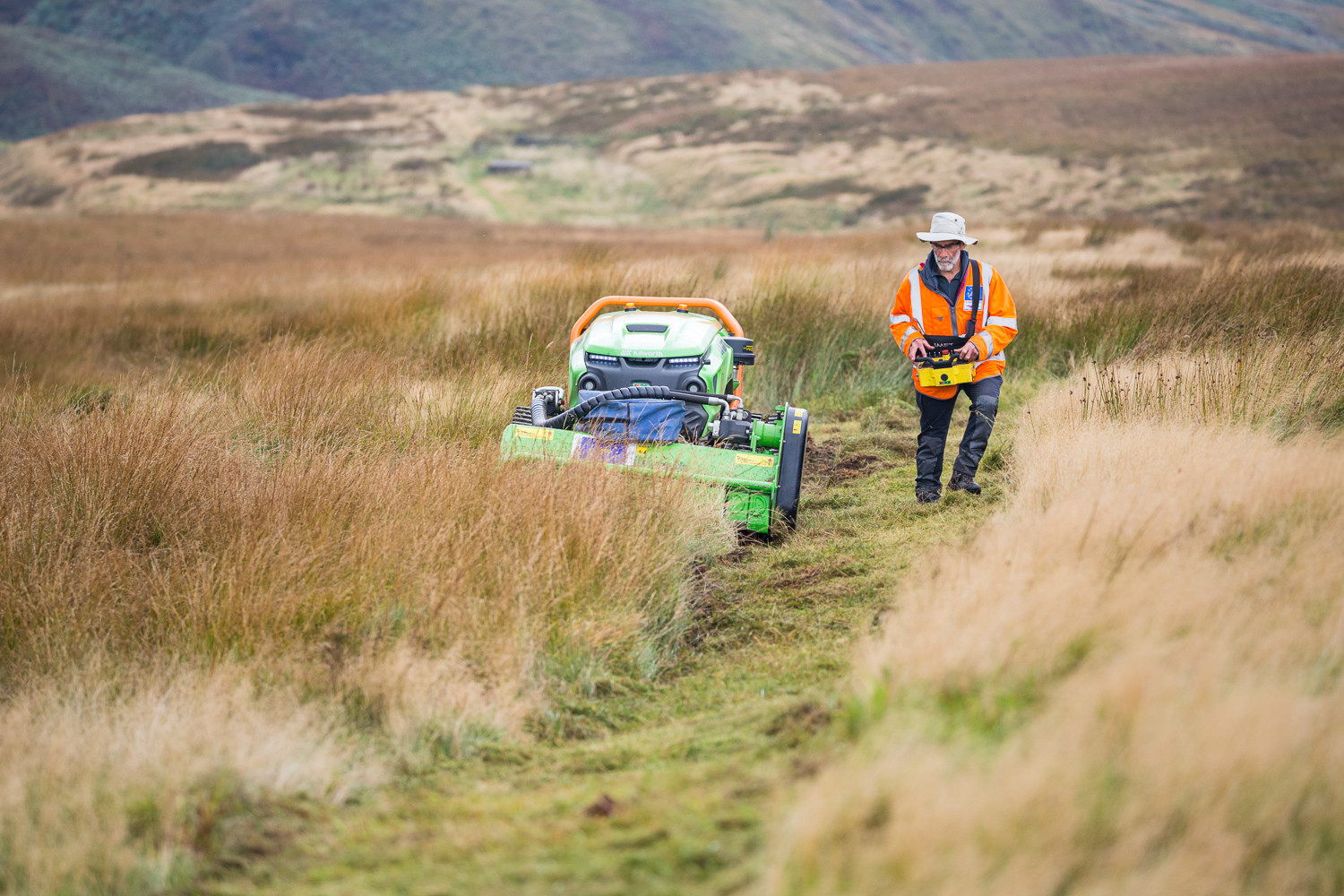
An ideal moorland landscape should include a variety of native moorland species, including various mosses, grasses and shrubs. In order to allow space for this biodiversity to establish itself, under the Moor Resilience 2030 project, Yorkshire Water is working through Moors for the Future Partnership to extensively cut overly dominant moorland species as part of their restoration work on sites in the Peak District and South Pennines that carry national and international designations for the habitats and species that should be found there.
One of these species is the highly dominant Purple Moor Grass (Molinia caerulia) which spreads fast of moorland sites, but at the expense of other species. Animals often avoid eating Molinia, consuming other nearby plants instead, thus contributing to its over-abundance. Molinia also dries out quickly under warm and windy conditions, leaving it very susceptible to the threat of wildfire.
Moors for the Future Partnership’s science and monitoring team will be conducting tests to see what impact different restoration techniques have on Molinia dominance. The aim of these techniques is to either or reduce the amount of Molinia present on site, or out-compete the regrowing Molinia by planting sphagnum moss and vascular plug plants. They will monitor the vegetation composition of the sites after the techniques have been applied, and also the difference it makes to the hydrology of the sites. The Science & Monitoring team is currently collecting baseline data from the sites, and is looking to install the interventions between January and March 2027, with the after-data being collected until 2030.
Since the time of the Industrial Revolution, the moorlands of the Peak District and South Pennines have been suffering from the legacy of centuries of pollution from the coal-fired factories that once surrounded them. However, these precious landscapes are gradually being brought back to life, thanks to organisations working in partnership to reverse this damage. And, while this work has achieved great improvements in the last 20 years, there is still work to be done to ensure these habitats can look after themselves.
As 70% of the drinking water in the UK begins its journey into reservoirs from remote upland areas like the Peak District, these precious moorlands were damaged by the pollution of the Industrial Revolution and it is through partnership working that these habitats have been brought back to life. Since 2003, Moors for the Future Partnership has been taking an evidence-based approach to restoring this damaged landscape, and Yorkshire Water has now entered into a 5-year funding agreement with the Partnership, to help to carry this essential work forward.
Restoration of peatlands delivers a number of benefits across the region:
- providing habitat for special wildlife including many endangered birds
- improving water quality in reservoirs and rivers by preventing erosion
- reducing the risk of flooding by slowing the downhill flow of water from the hills during storms
- actively fighting climate change by absorbing and storing carbon from the atmosphere
- reducing the risk of moorland wildfires because in good condition bogs are very wet
- providing everyone with an incredible landscape to enjoy at our leisure
- providing economic and social benefits
With these ends in mind, Yorkshire Water’s Moor Resilience 2030 project will include the blocking of gullies (naturally eroded channels in the peat) and grips (man-made channels) in order to hold water on the moors, and trap sediment that would otherwise be carried into reservoirs and rivers. There will also be extensive planting of the essential bog-building plant, sphagnum moss, which can hold up to 20 times its weight in water, and thus also helps to keep the peatlands wet, and also sieves out impurities that would otherwise enter the water supply.
Paul Titterton, Senior Research & Monitoring Officer at Moors for the Future Partnership said: ‘The dominance of Molinia on moorland landscapes acts as a barrier to the mosaic of different species that should be presence on a healthy moorland. Taking an evidence-led approach to this problem, we are seeking long-term solutions to slowing down its growth and allowing other plants to assert themselves alongside it, thus creating the biodiverse landscape that we’re always looking for.’
Carol Prenton, lead SSSI and portfolio surveyor at Yorkshire Water, said: ‘The funding from Yorkshire Water for restoration work by Moors for the Future Partnership will secure multiple benefits from healthy moorlands. Our 5-year environment strategy focuses on water quality and biodiversity and this monitoring programme for the Partnership will look for natural solutions to create the biodiversity that’s so important for resilient moorland landscapes.’