
Search begins for lost WW2 airman at Twizle Head Moss
10/9/2026
Exactly 82 years after a B-24H Liberator aircraft crashed on a hillside in the Peak District during a training flight in poor visibility, killing all but one of the people onboard, teams are working together to find the last remaining missing crew member, with the permission of his family.
UK based forensic archaeology specialists, Geoscope Services Ltd, working on behalf of US Defense POW/MIA Accounting Agency (DPAA) and in partnership with Yorkshire Water and Moors for the Future Partnership, are searching for a missing World War II US airman in West Yorkshire on Twizle Head at Lightens Moss, owned by Yorkshire Water.
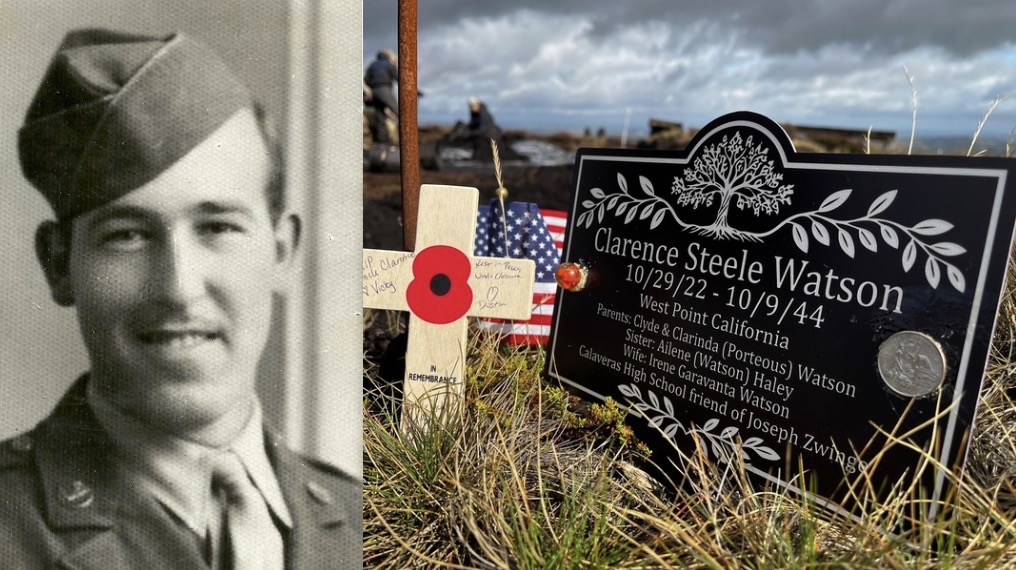
The US Army Air Forces (USAAF) B-24H crashed during a training flight in poor weather on October 9, 1944, with only one survivor from the ten-person crew. One crew member, Corporal Clarence S Watson remains listed as Missing in Action. This operation seeks to uncover evidence from the crash site and, if possible, recover evidence of the missing airman for repatriation to the United States.
The plane crash took place on peatland, and, as a war grave, has been legally protected to remain untouched since the crash 82 years ago. The wet, acidic properties of peat act as a natural preservative meaning it is possible that objects from the aircraft may have been preserved within the peat. Following the operation, the peatland will be restored to a more stable condition than before works were undertaken.
The incident took place on October 9, 1944, when B-24H aircraft #42-9481 "Sack Time!" crashed during a cross-country training flight out of Harrington, England. The crew was part of Operation Carpet Bagger, a top-secret mission focused on supplying resistance groups and agents in occupied Europe. These missions involved flying at low altitudes, and on this training flight, that low-level flying ultimately led to the crash near Holmfirth, West Yorkshire, when the aircraft struck a cloud obscured hill.
Corporal Clarence S. Watson was one of ten US servicemen aboard the B-24H “Sack Time!” when it departed Harrington. Police Constable Dexter Ellis was one of the first people on the scene after the crash on 9th October 1944 and reported that the plane apparently hit the moor in dense fog and broke into several pieces. Two people survived the crash, though one later died at hospital. The bodies of seven others were later recovered and buried at Cambridge American Cemetery or in their hometowns in the US. On October 12, 1944, when U.S. soldiers and local police removed the aircraft's fuselage, they discovered a burnt parachute believed to be associated with Corporal Watson, but its current whereabouts are unknown.
Military authorities at the time concluded that Corporal Watson's remains were destroyed in the aircraft crash and subsequent fire, rendering them unrecoverable. Corporal Watson’s name appears on the Wall of the Missing at Cambridge American Cemetery.
In October 2023, Geoscope Services Ltd, working with the DPAA, began investigating the Twizle Head Moss crash site. With permits from Yorkshire Water and guidance from Natural England and the Peak District National Park, the team conducted extensive geophysical and topographical surveys to get a clearer understanding of the crash. As a result, they identified several promising locations where evidence related to Corporal Watson could be found.
Following this, Moors for the Future Partnership has collaborated closely with Geoscope, Yorkshire Water, and Natural England to create a detailed plan for a second investigation. This next phase, which will operate under strict controls, allows for targeted archaeological work and analysis in specific areas of the site. The project is scheduled to start in late August and continue into early October 2026.
The plan is designed, not only to guide the investigation, but also to minimise any potential impact on this ecologically sensitive area, with comprehensive measures for additional restoration work. It’s important to note that the original crash and fire left a scar on the moor that has never fully healed, in fact, it has worsened over the past 82 years. One of the added benefits of this project is the chance to address that damage and support the long-term recovery and regeneration of the site.
The site is in a popular area for walkers and is well known among aviation enthusiasts. However, as a military aircraft crash site, it is legally protected by the Protection of Military Remains Act (1986). We kindly ask that members of the public do not attempt to enter the excavation area or disturb the ground. Doing so without a license may be a criminal offense and could jeopardize the success of the investigation.
Additionally, we request that the public avoid the site while restoration works take place, after the excavation is complete, as the ground will be vulnerable until restored.
G.R. “Rocky” Gillette, DPAA Director for Partnerships and Innovation said: “This complex project has truly been a model of international cooperation and coordination. Thanks to DPAA’s long-standing partner, Geoscope Services, closely collaborating with Yorkshire Water, Moors for the Future and Natural England, we are in a good position to pursue our proposed field activities to try to account for Corporal Watson.”
Tim Fletcher, Managing Director of Geoscope Services, said: “It is always a privilege for Geoscope Services to undertake projects on behalf of the US Department of Defence. The opportunity to honour the memory of these courageous individuals, and to provide answers and closure to the families of service members who made the ultimate sacrifice, is the most rewarding aspect of our work.”
“This project could not have been achieved without the invaluable support and guidance of Yorkshire Water and Moors for the Future Partnership. Together, we have developed a thorough mitigation and compensation strategy to protect and enhance the moorland at the crash site. Our approach is fully aligned with our investigation goals, and will leave a lasting legacy that both honours the memory of those lost and fosters the ecological restoration of the moorland, which continues to bear the scars of this tragedy 82 years later.”
Carol Prenton, lead SSSI and portfolio surveyor at Yorkshire Water, said: “Yorkshire Water has been pleased to support Geoscope in their aims to locate evidence of, and, if possible, recover remains of the missing crewmember for repatriation to the United States. Twizle Head Moss is an important SSSI site and Special Area of Conservation and we will be working with Moors for the Future, when the search has completed, to return the site to nature, creating a rich biodiversity and moorland restoration project so this landscape can heal for future generations to enjoy.”
Chris Pembroke, Senior Conservation Works Officer at Moors for the Future Partnership said: “Moors for the Future have previously undertaken restoration of the peatlands on the wider Twizle Head site, to improve the condition of the landscape that was degraded due to widespread effects of pollution from the industrial revolution. We have not previously been able to carry out works in the area of the crash due to its status. Now, working under the Protection of Military Remains Act licence we be able to carry out selected restoration work after the investigation phase to help repair and restore the peatland in the vicinity of the crash site.
"Working in partnership with Geoscope and Yorkshire Water means we can manage and mitigate potential negative effects of the investigation works to ensure it is planned and undertaken without risking harm to the peatland habitat and are pleased to be able to undertake additional restoration works in these previously inaccessible areas.”