
Great Yorkshire Rivers pledges to break down more barriers after strong start
10/27/2026
Great Yorkshire Rivers partners have come together to celebrate progress made in tackling artificial barriers to improve fish passage in the county’s rivers and lay out ambitious plans for the years ahead.
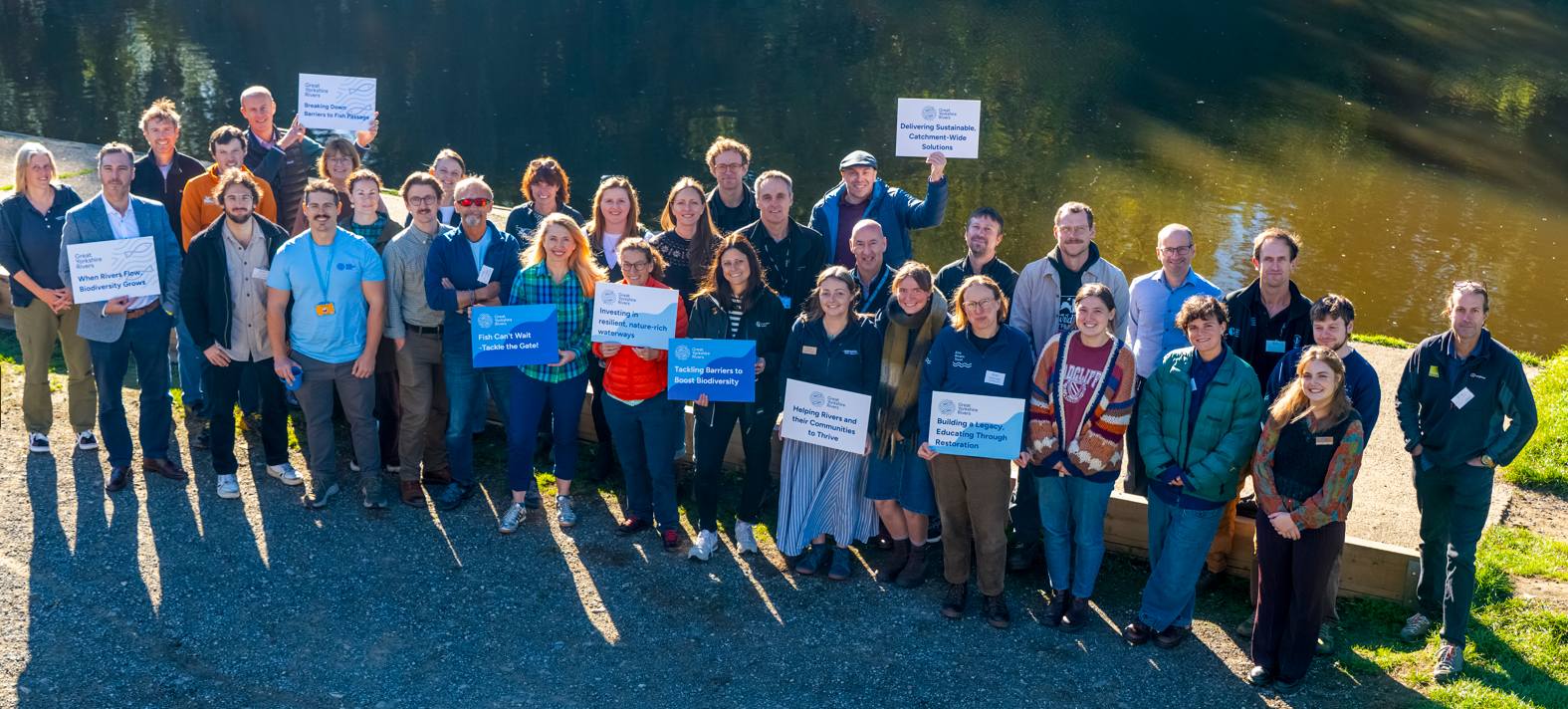
At an event held at Bradford Amateur Rowing Club, on the banks of the river Aire, partners such as Yorkshire Wildlife Trust, North York Moors National Park, and all of Yorkshire’s River Trusts, came together to celebrate the completion of more than 20 projects, with a further 20-plus in progress.
Partnership work delivered through local rivers’ trust groups, wildlife and conservation groups and local ‘friends of’ has opened up nearly 100km of river, alongside extensive mapping and prioritisation of barriers and engagement with landowners.
Great Yorkshire Rivers is supported by £8.7m through Yorkshire Water's WINEP programme, with a £10.3m match-funding target and a further £3.4m allocated through an Ofwat redress package. Funding is provided through a combination of core and enabling funds, helping partners deliver meaningful environmental improvements across Yorkshire.
However, the partnership’s impact goes beyond investing in physical river restoration projects. It is also strengthening the long-term resilience of the sector by helping organisations across Yorkshire develop the skills, knowledge and capacity needed to continue protecting and enhancing rivers for years to come.
There have been 20 new roles created across partner organisations and the Great Yorkshire Rivers team. The partnership has recorded more than 150 volunteer hours and partners have taken part in more than 800 hours of training and collaboration.
As an example of how the enabling fund is supporting partners, River Holme Connections has involved volunteers in surveying barriers along the River Holme and its tributaries:
- 56 surveys have been completed
- 15 volunteers contributing 80 hours
- Resulting in nine weirs being added to the River Obstacles database
- 11 collapsed weirs being identified as needing removal
- 6 structures previously thought to be natural waterfalls identified as man-made.
The work has also helped River Holme Connections engage with landowners and increase volunteers' understanding of the impact barriers can have on rivers and wildlife, with some volunteers now willing to advocate for weir removal in their communities.
What was loud and clear from the celebration event was the enthusiasm of partners to look at how Great Yorkshire Rivers can build on the progress so far by developing larger, more ambitious river restoration projects and taking a more strategic approach to improving river connectivity.
The celebration event included a "Bold Ideas, Real Barriers" workshop, giving partners an opportunity to identify ambitious projects, consider the benefits they could deliver and work through the challenges that could stand in their way. The aim is to help shape Great Yorkshire Rivers next phase and create long term legacy and impact for the rivers and their surrounding communities.
A potential future project shared by the Environment Agency, proposes a new pass alongside its planned Tadcaster Flood Alleviation Scheme. £500,000 is being requested from the Flagship Fund towards construction of the replacement fish pass enabling better connectivity.
If delivered, it would open up a significant length of good-quality river habitat for migratory species, with construction proposed to begin in 2028, subject to planning permission. The project could also provide learning and best practice for future fish pass projects and create opportunities for further improvements upstream in the River Wharfe catchment.
More broadly, Great Yorkshire Rivers partners are looking at how they can move beyond individual, opportunistic projects towards more strategic catchment-scale planning, build a stronger evidence base, strengthen cross-sector partnerships and address challenges including permitting and rising delivery costs.
The partnership is also beginning discussions about its longer-term scope and ambition, including future funding, partner capacity and the evidence needed to demonstrate its positive impact. One of the long-term successes is the potential expansion of the partnership model into other water company areas as a future opportunity.
Rosslyn Colderley, Great Yorkshire Rivers Partnership Manager, said: “The Great Yorkshire Rivers partnership shows what we can achieve when organisations across Yorkshire come together around a shared ambition for our rivers.
“There’s already a lot to be proud of as we are nearing 100km of river opened up and more projects being delivered across the region. What is quite unique about this funding is that we are not just investing in capital projects and programmes of work, we’re investing in the people and organisations that will help make this work happen and allow it to be sustainable for the long term.
“But we know there is much more to do. The next step is to build on what’s working and look at how we can tackle bigger, more ambitious projects together, so that we can deliver lasting benefits for Yorkshire’s rivers, wildlife and communities.”
Great Yorkshire Rivers partnership brings together Yorkshire Water, the Environment Agency and the Rivers Trust and 13 local river trusts, environmental organisations and charities from across Yorkshire to tackle artificial barriers such as weirs, which can prevent fish and wildlife moving freely and affect natural river processes. Its long-term vision is to address all artificial barriers that negatively impact fish populations across Yorkshire by 2043, while delivering wider benefits for rivers and communities.