Yorkshire Water completes £2.4m Beeston storm overflow project
7/13/2026
Yorkshire Water has completed a project in Beeston to reduce discharges into Farnley Wood Beck. It is the first scheme in the current £1.5bn storm overflow improvement programme to finish.
The scheme at Millshaw Combined Storm Overflow (CSO) kicked off the wider programme in August 2025, being the first of over 450 planned schemes to be completed by April 2030.
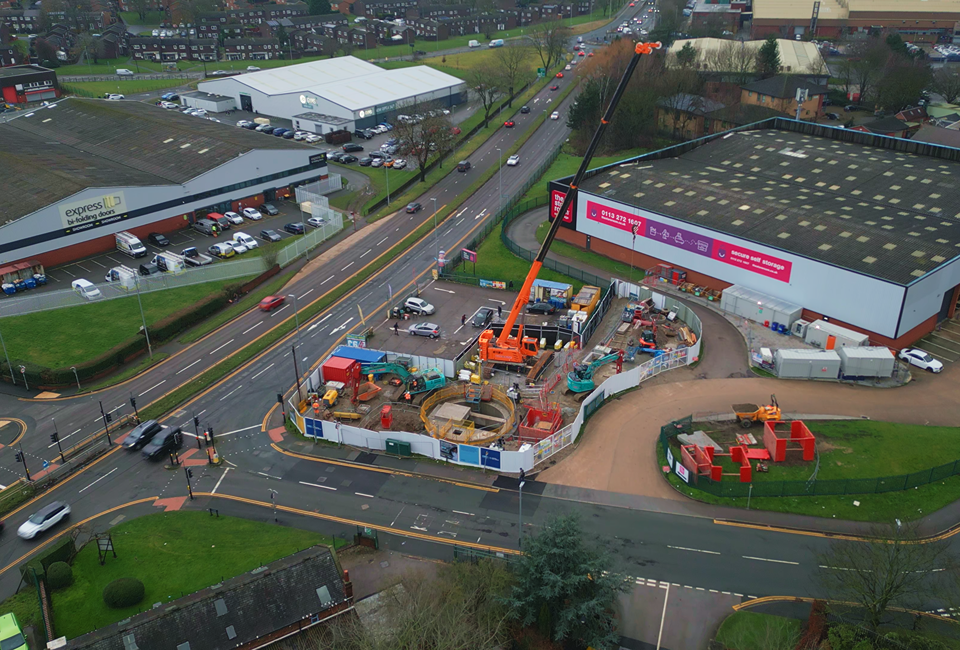
Reducing discharges into Farnley Wood Beck, the £2.4m scheme has seen the installation of a new underground storage tank capable of holding 260m3 of flow within the combined sewer network, which transports both rainwater and wastewater to a local treatment site.
The tank, built on private land, took contract partners, Ward & Burke, nine months to build and connect to the network.
Storage tanks build additional capacity into the network, holding excess wastewater during periods of bad weather to prevent it from being discharged. Flows will be sent for treatment when capacity in the network has returned to normal levels.
A second scheme – a £0.5m project in Stourton replacing the filtering screen of a storm overflow to reduce the likelihood of sewer debris entering the river Aire during a discharge – has also recently finished.
Dan added: “We are making great progress in Leeds, where we have a target of reducing the number of discharges by 72% by 2030. Now that we have completed the first couple of projects, we are delivering on our commitment to improve our impact on river health.”
At present, there are 10 projects underway in Leeds, including:
- Wyther Lane, Kirkstall
- Kirkstall Educational Cricket Club
- Village Place, Burley
- Spen Lane, Headingley
- Fraser Avenue, Horsforth
- Sussex Avenue near Hunslet
- Jack Lane, also near Hunslet
- Claremont, Horsforth
- Canal Road, Armley
- Temple Avenue, near Temple Newsam
Elsewhere in Yorkshire, there are schemes underway in York, Sheffield, Barnsley, Bradford, Calderdale and across North Yorkshire.
Storm overflows are designed to act as a relief valve for the combined sewer network, which carries both wastewater and surface water, during periods of heavy or prolonged rainfall. They discharge when the system is at capacity to prevent flows backing up and flooding homes and gardens.
Across Yorkshire, the need for storm overflows to operate will be reduced by building new:
- Surface water sewers, to separate surface water and wastewater so that wastewater networks aren’t impacted by bad weather
- Underground storage tanks, to build additional capacity into the network
- Nature-based solutions, to build additional capacity into the network
- Sustainable drainage systems, to slow the flow of surface water into the combined network
The storm overflow project is part of Yorkshire Water’s £8.3bn investment into its services and the environment over the next five years.