Yorkshire Water begins real time AI water quality project
5/22/2026
Yorkshire Water, in collaboration with AI specialists UnifAI Technology, has started an innovative research project that uses AI modelling to provide real-time water quality predictions at designated bathing water sites across the county.
If successful, the two-year project could transform how water quality is currently monitored at inland bathing sites, giving swimmers, paddlers and other recreational river users clearer, quicker and more accessible information than ever before.
Dan Byles, CCO at UnifAI Technology, explains: “Current water quality monitoring relies on periodic sampling and laboratory testing. Although essential, these processes are time‑consuming and only provide a historic picture of conditions rather than what is happening at the moment people enter the water.
“As a result, the public often learns about potential health risks after the fact. Knowing swimming in recent days or weeks may have exposed people to high levels of bacteria is too late; the UnifAI Technology and Yorkshire Water research collaboration is looking to accelerate this process through AI learning.”
The research project is funded through Ofwat’s Water Breakthrough Challenge 5 Catalyst stream. Working in partnership with UnifAI Technology, The Rivers Trust and the British Standards Institution (BSI), and with support from Southern Water and environmental monitoring company, SOCOTEC.
The project combines current, manual flow and water quality monitoring with 2-years of AI machine learning to create a predictive model of water quality in real time. Specialist flow and water quality monitoring technology installed by SOCOTEC will take readings every 15-minutes at each of the 20 bathing water sites. These riverside sensors measure individual chemical parameters such as dissolved oxygen, pH levels, ammonia, temperature, and turbidity.
This real-time data is combined with the results of water samples, taken 4-times per week at each individual site, which have been lab-tested for the presence of harmful bacteria such as E.Coli and Enterococci.
It is hoped more than 7,800 data sets, gathered over 24-months will give UnifAI Technology’s machine learning sufficient analytics and time to develop advanced AI models capable of predicting levels of harmful bacteria, such as E.coli and Enterococci, in near real time.
Faye Cossins, Coastal Delivery & Engagement Manager at Yorkshire Water, said:
“We know that people are passionate about their Yorkshire rivers and waterways, and they rightly want clearer, quicker information about water quality. This project has real potential to give communities near real‑time insights so they can make confident, informed decisions about taking a dip.
“We’re pleased to be leading this work with our partners and with funding from Ofwat’s Breakthrough Challenge. It’s an important step forward in innovation, transparency and preparing for future environmental monitoring requirements.”
“Using specialist monitoring sensors, on‑site sampling and UnifAI Technology machine‑learning, the 2-year project will gather over 7,800 samples from 20 varied inland bathing water sites. This data will be used to build a transferable, “site‑agnostic” AI model that can predict bacteria levels across different water types — from rivers to lidos to coastal inlets. If proven, the technology has the potential to be deployed widely and at scale.”
A key aim of the project is to make data openly available. In future, if the project is successful, the public will be able to access near-live water quality predictions through a user-friendly web app, helping them make informed decisions before entering the water. Regulators and partners will also benefit from accessible, real-time insights to support environmental protection, planning and investment.
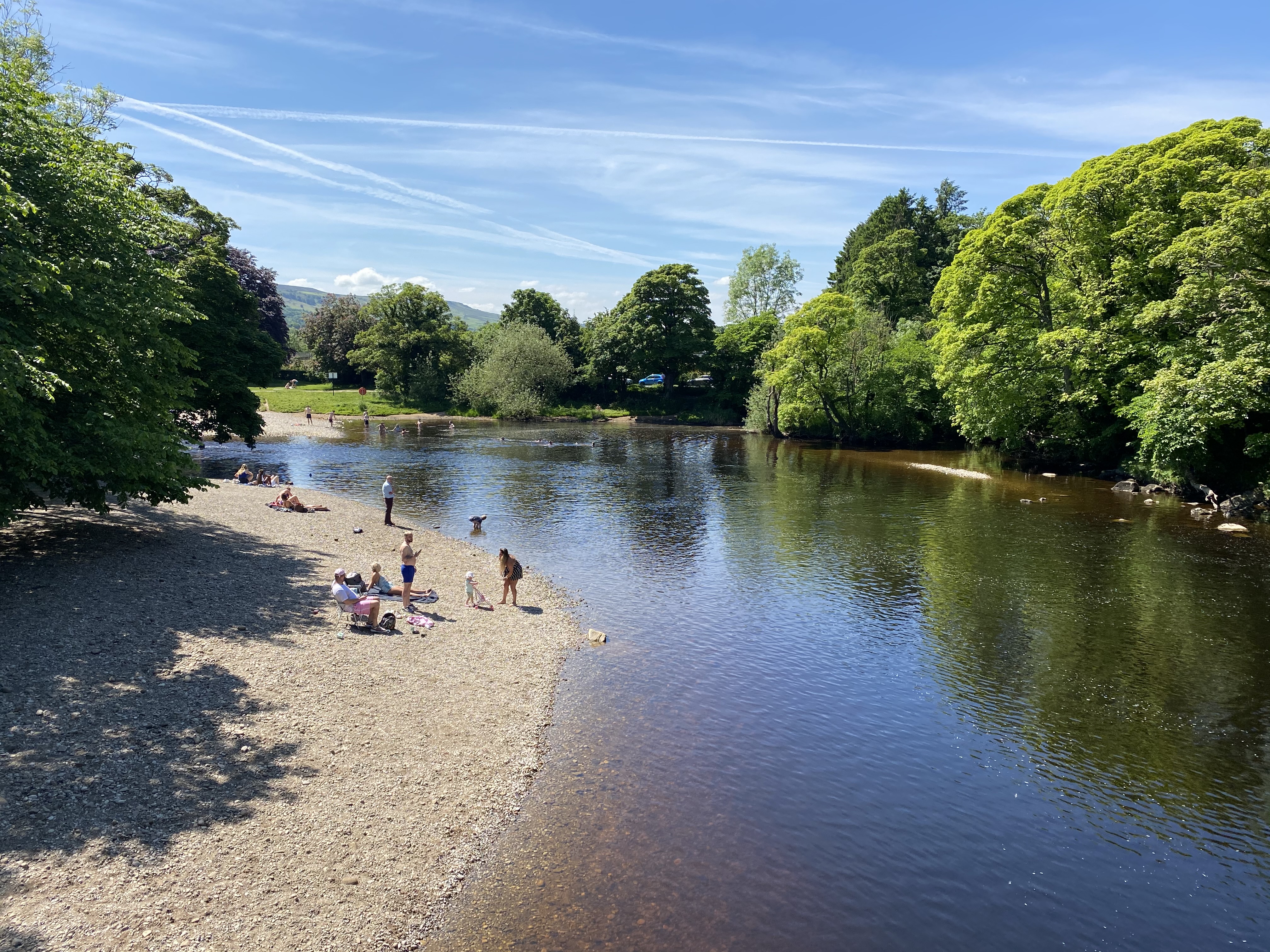
Inland bathing water sites taking part in the project include Ilkley, Wetherby and Knaresborough, with popular water recreation sites at Masham, Burley in Wharfedale, Harrogate North, Springfield Avenue Bridlington, Doncaster Rowing Club, Dowley Gap and Scalby Beck, also included. Further locations are expected to be added soon.
Isabell Holling, Managing Director of Monitoring & Surveying at SOCOTEC UK & Ireland, said: “We are pleased to support this groundbreaking project by deploying our specialist environmental monitoring technology across 20 appointed inland bathing water sites. The precision and reliability of continuous water quality data is fundamental to the success of this AI-driven approach.
“Our equipment will provide the robust, high-frequency measurements needed to train predictive models that can truly protect public health. This collaboration demonstrates how advanced monitoring technology and artificial intelligence can work together to transform environmental management and deliver real-time insights that benefit both communities and regulators.”
Although the project represents a major step forward in innovation, the AI model requires two full years of data collection and testing before its accuracy can be confirmed — and, if successful, the technology will give people clearer, real-time information, it does not replace ongoing investment work to improve water quality and reduce pollution.
The project already builds on proven AI deployments at Warleigh Weir and Bournemouth Boscombe, where early models have achieved 87% accuracy. Through collaboration with UnifAI Technology, BSI and The Rivers Trust, Yorkshire Water aims to create a template for real-time water quality monitoring.
The programme will also support upcoming requirements under Section 82 of the Environment Act, which mandates continuous water quality monitoring upstream and downstream of all combined sewer overflows by 2035.
This project has been funded through Ofwat’s Water Breakthrough Challenge.