PipeUP and CH4NGE are Water Breakthrough Challenge winners for Yorkshire Water
5/19/2026
Two innovation projects led by Yorkshire Water announced as Water Breakthrough Challenge Winners 2026.
- PipeUP is a universal platform where UK water companies can securely share leakage, infrastructure, and other related data to develop smarter solutions. Carbon Harvesting for Energy (CH4NGE) will trial a new way to treat wastewater, capturing carbon, reduce energy in the process and reduce greenhouse emissions.
- Yorkshire Water is the lead partner in both research projects; working in partnership with TetraTech, Thames Water, United Utilities, HAL Group and the Universities of Sheffield and Southampton to deliver PipeUP; and partnering with Xylem and Cranfield University on CH4NGE.
- The sixth Water Breakthrough Challenge, funded by the Water Innovation Fund, has awarded £58 million in total across 19 projects, tackling the water sector’s biggest challenges.
- Over 10 years, the Water Innovation Fund is investing £600 million in innovative projects and technologies to benefit the environment, society, and customers.
Two innovative projects – PipeUP , a secure collaborative platform for water companies to share knowledge, data and information to enable smart solutions for the Utility sector, and CH4NGE - a process to harvest energy and reduce emissions created through the wastewater treatment process – have been named as winners in the sixth Water Breakthrough Challenge of Ofwat’s Water Innovation Fund.
PipeUP, a collaboration led by Yorkshire Water in partnership with TetraTech, HAL Group, the Universities of Sheffield and Southampton, and water companies including Thames Water and United Utilities, has been awarded £1.5m.
It is designed as a collaborative, sector‑wide project working with other water companies, suppliers and academic partners. Tetra Tech will develop a universal, secure digital platform that links and shares knowledge, information, and data to accelerate innovation across water companies and their supply chain. Initially focused on leakage, the shared platform will enable faster leak detection; reduce waste; minimise disruption; and protect the environment for our customers.
Rather than creating new analytics tools, PipeUP focuses on getting the foundations right. It links and improves existing data so that water companies, suppliers and academics can use it more easily to develop smarter solutions.
Yorkshire Water has already funded a proof of concept with Tetra Tech to test this approach. The work shows that linking acoustic data with repair and network information is technically achievable and operationally valuable.
Katrina Flavell, Innovation Technical Specialist at Yorkshire Water, said:
“Doing the right thing and delivering real value for our customers means laying strong foundations; this is what PipeUP aims to do. It looks to provide the basis for UK water companies and commercial service providers to innovate, drive down leakage, and provide great value and service for our customers.
Bringing data together in a consistent way and providing easier access to that data will support and encourage broader innovation that will help water companies make informed, smart decisions. For customers, this fast-track to innovation should help water companies to find and fix leakage faster, reduce wastage and lead to more sustainable use of water resources.”
Carbon Harvesting for Energy (CH4NGE) is also a Water Breakthrough Challenge winner and has been awarded £1.6m towards the project. It is led by Yorkshire Water in partnership with Xylem, a leading global water solutions partner, and Cranfield University who will be providing performance analysis, benchmarking and validation, Thames Water and United Utilities.
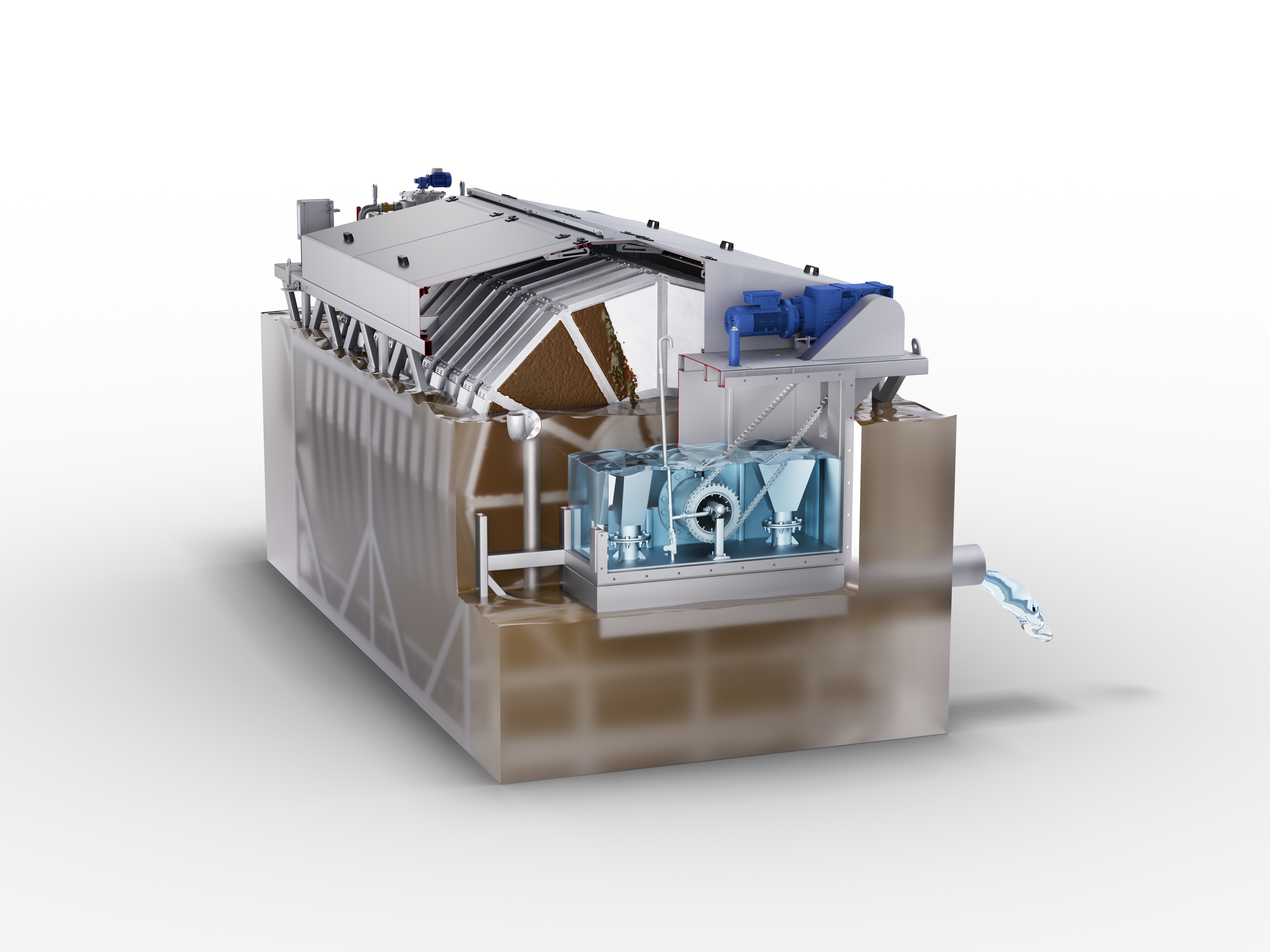
The CH4NGE project is trialling a new way to treat wastewater by capturing more carbon in the primary treatment stage in order to produce more renewable energy, reduce energy consumption and reduce greenhouse gas emissions from the activated sludge process.
Data will be captured through a 12-month pilot of Xylem’s Taron© filter, and system modelling will show how this innovation can reduce costs, improve environmental performance, and help the water sector move towards its Net Zero ambition, delivering better outcomes for customers and the environment.
Carbon Harvesting for Energy or CH4NGE, looks at how we can capture more carbon earlier in the wastewater treatment process and use it to generate renewable energy. Traditionally, much of the carbon in wastewater is broken down later in the treatment process, using a lot of energy and releasing greenhouse gases like nitrous oxide and methane. CH4NGE trials a different approach.
Using Xylem’s Taron© filter technology, we aim to capture more carbon at the primary treatment stage, also lowering the organic load entering the secondary treatment phase. This intervention reduces aeration energy demand and stabilises the carbon to nitrogen ratio, which helps reduce nitrous oxide formation during denitrification.
Richard Kershaw, R&D Innovation Wastewater Programme Manager, Yorkshire Water: said:
“Adopting Xylem’s Taron© filter technology to capture more carbon earlier in the wastewater treatment process will both cut and create energy. Cranfield University will carry a full lifecycle analysis along with bench-scale anaerobic digestion and activated sludge trials. These will quantify biogas potential, assess nutrient removal, and identify any associated risks such as carbon-limited denitrification and nitrous oxide emissions, critical for validating downstream impacts.”
Carbon Harvesting for Energy (CH4NGE) is also a Water Breakthrough Challenge winner and has been awarded £1.6m towards the project. It is led by Yorkshire Water in partnership with Xylem, a leading global water solutions partner, and Cranfield University who will be providing performance analysis, benchmarking and validation.
The CH4NGE project is trialling a new way to treat wastewater by capturing more carbon in the primary treatment stage in order to produce more renewable energy, reduce energy consumption and reduce greenhouse gas emissions from the activated sludge process.
Data will be captured through a 12-month pilot of Xylem’s Taron© filter, and system modelling will show how this innovation can reduce costs, improve environmental performance, and help the water sector move towards its Net Zero ambition, delivering better outcomes for customers and the environment.
Carbon Harvesting for Energy or CH4NGE, looks at how we can capture more carbon earlier in the wastewater treatment process and use it to generate renewable energy. Traditionally, much of the carbon in wastewater is broken down later in the treatment process, using a lot of energy and releasing greenhouse gases like nitrous oxide and methane. CH4NGE trials a different approach. Using Xylem’s Taron© filter technology, we aim to capture more carbon at the primary treatment stage, also lowering the organic load entering the secondary treatment phase. This intervention reduces aeration energy demand and stabilises the carbon to nitrogen ratio, which helps reduce nitrous oxide formation during denitrification.
Richard Kershaw, R&D innovation wastewater programme manager, Yorkshire Water, said: “Adopting Xylem’s Taron© filter technology to capture more carbon earlier in the wastewater treatment process will both cut and create energy. Cranfield University will carry a full lifecycle analysis along with bench-scale anaerobic digestion and activated sludge trials. These will quantify biogas potential, assess nutrient removal, and identify any associated risks such as carbon-limited denitrification and nitrous oxide emissions, critical for validating downstream impacts.”
Jonny Newman, Chief Engineer Integrated Solutions, Xylem Water Infrastructure, said: "The CH4NGE project will use Xylem’s proven Taron® filter in a new application, aiming to capture far more carbon right at the start of treatment than traditional gravity treatment. The recovered carbon can then be diverted to anaerobic digestion, where it is turned into biogas, a valuable source of renewable fuel. CH4NGE has the potential to be a catalyst for water companies to reduce energy use in wastewater treatment and deliver more efficient and sustainable services to their customers.”
Jo Jolly, Director, Innovation, Ofwat, said:
“The water sector is going through its biggest transformation in 30 years. We have to make sure these changes drive far better outcomes for society and the environment. Multiple urgent challenges must be solved. And, importantly, our mindset must change. So that's our mission: bold, innovative solutions that take a long-term approach to the health of our vital water system and the impact of the water industry on environments and communities. This line-up of winners shows us just what can be achieved when we set our minds to it.”
The Water Breakthrough Challenge is delivered by innovation prize experts Challenge Works (part of Nesta), in partnership with Arup and Isle Utilities, and funded by Ofwat’s Water Innovation Fund.
The Water Innovation Fund is a key pillar in Ofwat’s mission to drive innovation that ensures the water sector is ready for the challenges of the future and results in better outcomes for customers and the environment.
To find out more about all 19 winners of the sixth Water Breakthrough Challenge or to discover previous winners, visit waterinnovation.challenges.org