What are we looking for?
We are looking for applications that contribute to one or more of the Fund's goals:
- Reduce flood risk in vulnerable communities
Support projects that help protect people and places from flooding, including improving drainage and local flood defences. - Help communities prepare for flooding
Fund projects that help people understand flood risks, prepare for flooding, and recover more quickly when it happens. - Manage rainwater where it falls
Support projects that slow down, store, or absorb rainwater to reduce flooding and protect local areas.
How much can you get?
- £2,500 - £10,000 (fully funded)
- £10,000 - £24,999 (contribution advised)
This isn’t a recurring fund. Applications will only be accepted during the funding window, which runs from 2 November 2026 to 14 January 2027. While we may offer future funding rounds, no further application windows have been confirmed at the moment.
What types of projects will we consider?
All proposed projects must be delivered within the Yorkshire region. The following are examples of eligible projects for funding:
- Tree planting
- Rain gardens
- Water butts
- Planters
- Swales
- Permeable paving
- Rainwater harvesting
Please note this isn’t a complete list, there might be other examples that aren’t included here.
Community engagement activities like the ones listed below are also eligible for funding where they complement an eligible project.
- School and/or community engagement and education on flood risk
- School and/or community engagement on water efficiency
Who's eligible?
Applicants must:
- Have a recognised organisation bank account (personal accounts are not accepted).
- Give all project details, estimated costs and an agreed completion date.
If demand for funding exceeds the available budget, priority will be given to projects located in areas of highest flood risk.
Eligible organisations include:
- Social housing
- Places of worship
- Schools
- Community buildings
- Libraries
- English Heritage sites
- Community Interest charities (CICs)
- Charity Groups (‘Friends of’ groups)
Application Process
All applications will follow a two-stage process:
- Initial screening to make sure that the project meets the eligibility criteria and fund objectives.
- Project consideration at a meeting of Yorkshire Water’s Fund Panel by subject matter experts. You may be approached with additional clarification questions during this stage.
Applications will only be considered between the opening and closing dates of the funding window.
Applicants will be notified of the outcome of their application within three months of the application window closing.
Any further questions?
Are there any organisations that aren't eligible for the Stop the Flow Community Fund?
Organisations not eligible for funding:
- Local authorities
- Individuals applying for funding for private properties
What activities are not eligible for the Slow the Flow Community Fund?
Activities not eligible for funding:
- A monetary donation to the general funds of an organisation. Contributions must be restricted to the proposed project only
- Funding for salaries or wages
- One-off events
- Construction or building works unrelated to the proposed flood resilience project.
What's it like working with Yorkshire Water on a scheme like this?
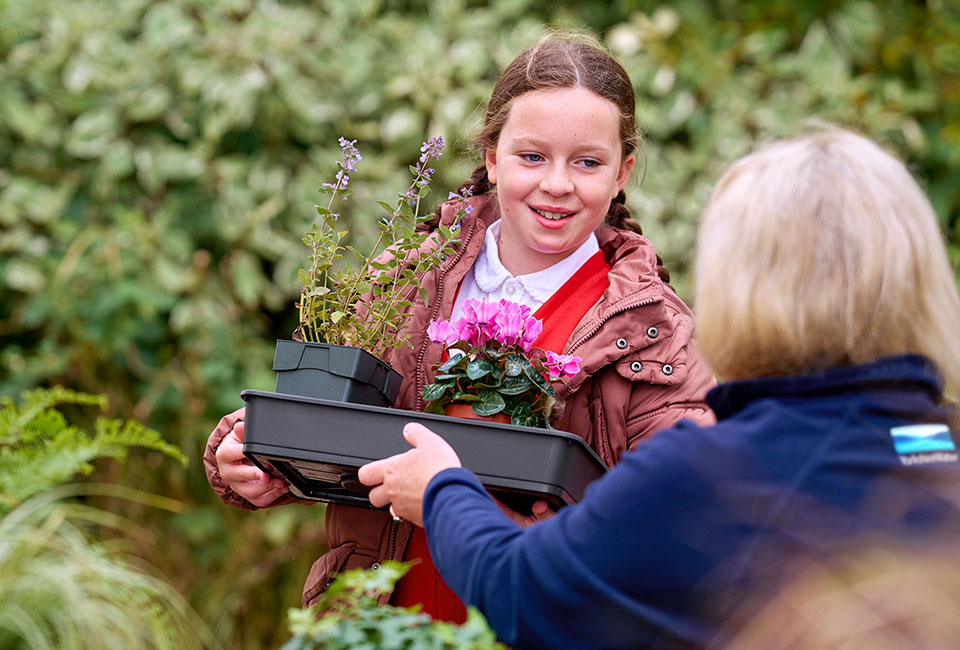
The Living With Water partnership and our Education team worked with Bilton Community Primary School to co-design a sustainable drainage scheme with Year 6 pupils. The sessions started with a lesson on the water cycle, helping students understand just how little usable water exists on our planet, and why it’s so important to protect and value it. They also explored how capturing and reusing rainwater can help communities like Hull become more resilient to flooding.
The students eagerly took on the challenge of designing green spaces for their school. Their ideas directly influenced the final scheme, which was made by our principal engineers at Stantec. This has now been installed, alongside additional flood alleviation measures, transforming the school grounds into a more sustainable and flood-resilient environment.
As part of the scheme, we installed three rainwater planters and one extra-large planter, all connected to the school’s roof downpipes. These features help to slow the flow of rainwater, reducing surface water runoff. They also double as vibrant habitats for wildlife - supporting local biodiversity while offering hands-on learning opportunities for students.
Why does rainwater management matter?
Rainwater management is critical for future sustainability for us. Managing rain where it falls helps to:
- Prevent flooding by reducing pressure on sewer networks during heavy rainfall.
- Protect rivers and the environment by reducing pollution and storm overflow discharges.
- Help adapt to climate change, which is expected to increase the frequency and intensity of rainfall.
- Maintain reliable wastewater services by making sure sewers and treatment systems can cope with increased volumes of water.
- Support environmental and regulatory commitments through sustainable drainage and natural solutions.
- Reduce reliance on portable water sources.
- Support long term water resilience across Yorkshire water resources.
Effective rainwater management helps us reduce flooding, protect water quality, improve environmental outcomes, and provide resilient wastewater services for customers.